Category: HEALTH

Covid-19 jab will be compulsory if need be – GHS

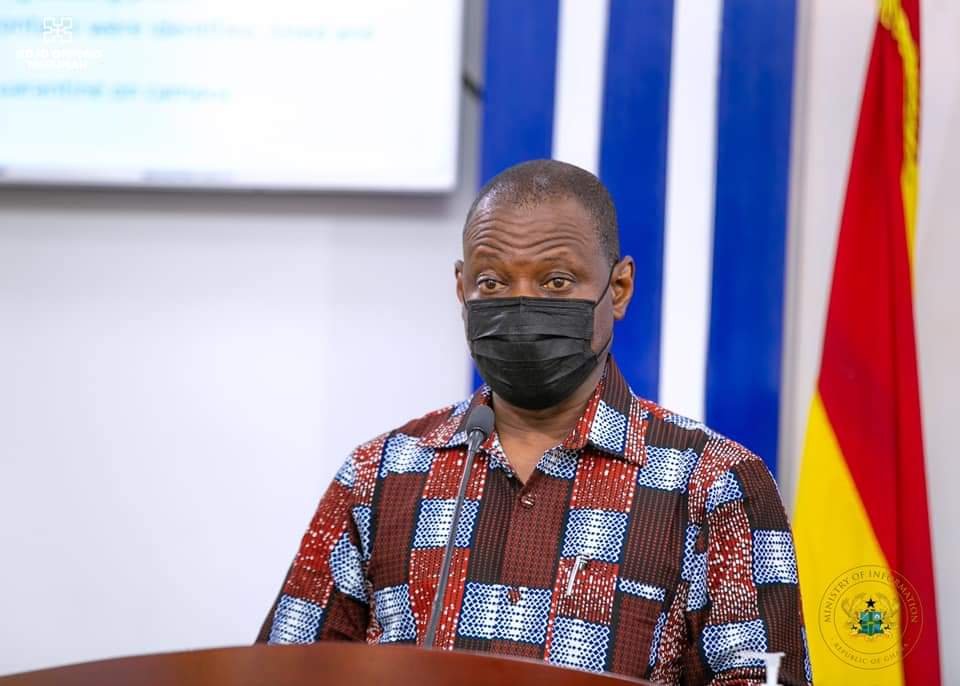
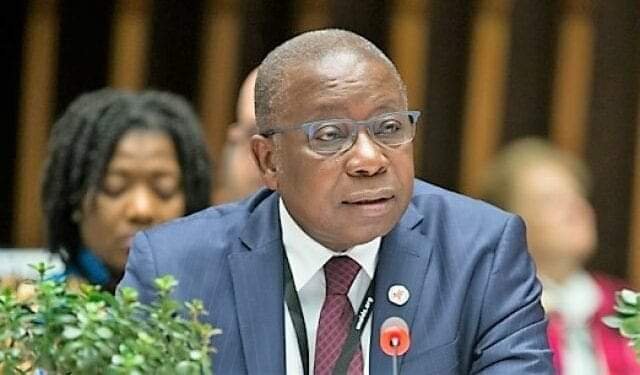
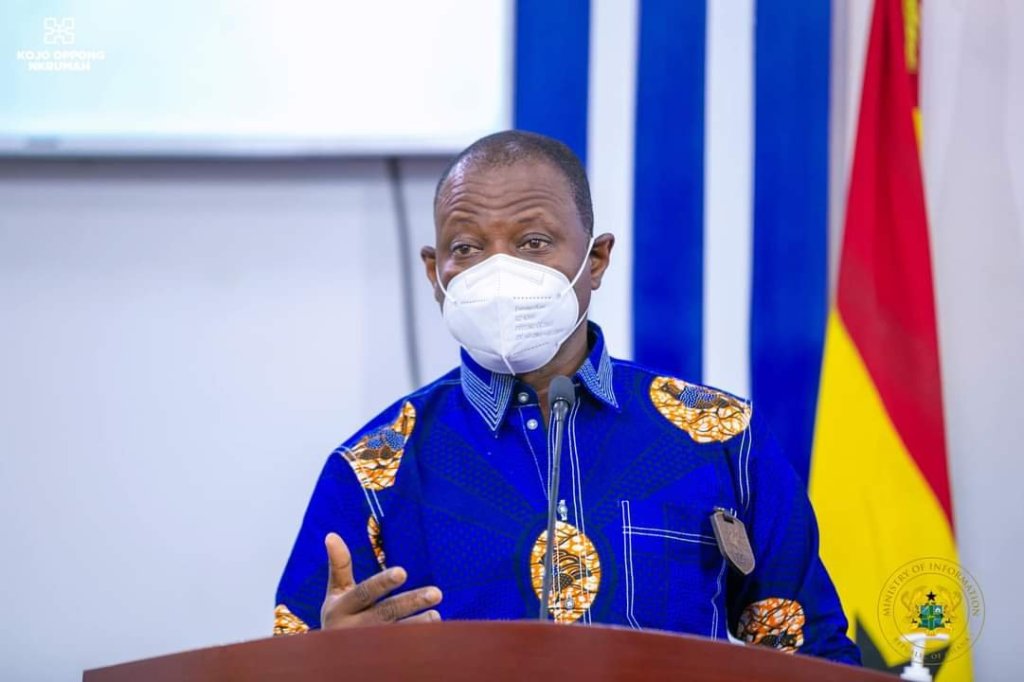
The Director-General of the Ghana Health Service, Dr. Patrick Kuma-Aboagye has said the GHS will make the Covid-19 vaccine compulsory if need be.

“I am sure that with time we will get there and it is something that we have to do to bring this pandemic under control and we need to ensure that almost everybody is protected. If it comes to that I think we will not hesitate to recommend that.

“We have companies in this country that have mandated that if you have not vaccinated, you can’t come to work… we have to bring the virus under control, we need to ensure that everybody is protected,” Dr. Kuma-Aboagye said on Accra-based Asaase Radio on Monday.

The government aims to vaccinate 20 million Ghanaians by the end of the year, however, as of November 18, 2021, only 3,493,688 Ghanaians had been vaccinated.

Meanwhile, students aged 15 years and above will soon be vaccinated against COVID-19 with the Pfizer-BioNTech vaccine.

This follows the approval “for extending the use of the Pfizer-BioNTech COVID-19 vaccine to cover children from 15 years and above.”

Initially, only persons above age 17 were given the Pfizer-BioNTech vaccine.

A statement issued by the Ghana Education Service (GES) signed by its Director-General, Prof Kwasi Opoku-Amankwa, noted that “as part of measures at halting the spread of COVID-19 in schools and among the general public, the Ghana Health Service has planned to vaccinate all children aged 15 years and above as soon as possible to increase their level of protection against COVID-19.”

The letter urged all Regional and District Directors of education to “work closely with their colleague Regional and District Directors of Health to facilitate the vaccination of all 15 years or older in schools across the country
Vaccination is making the difference in declining COVID-19 infections – GHS

Dr Patrick Kuma Aboagye556yh

The Ghana Health Service (GHS) said evidence locally and internationally shows that vaccination against the Covid-19 accounts for the steady decline in positive cases.

Additionally, improving adherence to Covid-19 safety and enforcement protocols also contributed significantly to the decline.

Ghana has recorded 128 positive cases of COVID-19 this September, 273 in August and 500 in July, this year.

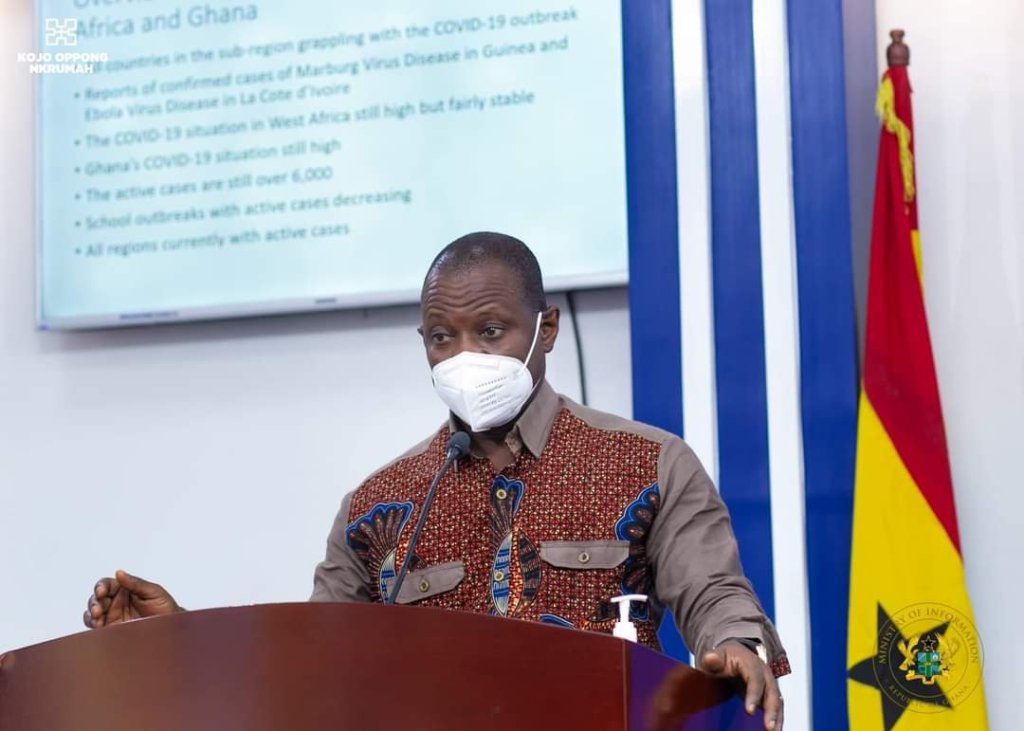
The GHS said as of September 23, 2021, there were 3,578 active cases, 1,147 deaths, 122,000 recoveries and 126,803 cumulative positive cases after 1.7 million tests.

At a media briefing in Accra on Sunday to update the public on COVID-19 cases, Dr Patrick Kuma-Aboagye, the Director-General of GHS, said the Service had so far inoculated 1.6 million Ghanaians, with 89 per cent of the vaccines coming from AstraZeneca, 10 per cent from Johnson & Johnson, and one per cent from Sputnik V.

He called for aggressive deployment of COVID-19 vaccines across the 16 regions, especially in market places, lorry parks, churches and mosques.null

Dr Kuma-Aboagye said the country had received nearly five million doses of the AstraZeneca Covishield from India, 21,000 doses of Sputnik V, 450,000 doses of Johnson & Johnson, and 1.2 million of Moderna vaccines.

Achieving herd immunity against

the Covid-19 had been government’s primary goal to halt the spread of the disease, he said.

President Akufo-Addo, in February this year, announced that although his administration sought to vaccinate the entire population, he aimed to vaccinate 20 million of the populace by the end of the year.

Source: GNA

Germany Supports Ghana’s Covid-19 Fight with 1.5m Vaccine Doses

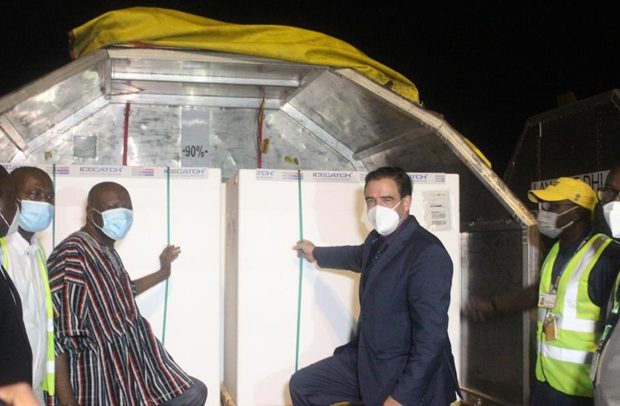
German Ambassador, Daniel Krull and the Deputy Minister of Health Alhaji Mahama Asei Seini in a symbolic handover of the vaccine doses.

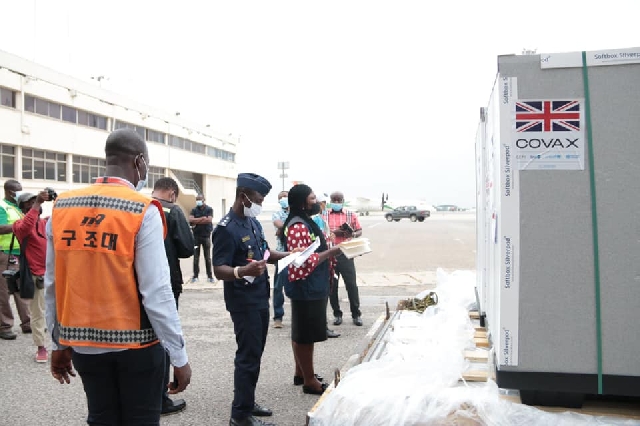
The Ministry of Health (MoH) has taken delivery of 1.5 million doses of AstraZeneca’s Covishield vaccine donated by the German government.××

The donation follows the announcement of additional Covid-19 vaccine support to Ghana by the German Chancellor, Angela Merkel, during the Africa Summit held in August 2021.

It is the second covid-19 consignment to be delivered to the country by the German government through the COVAX facility under the Access to Covid-19 Tools Accelerator (ACT-A) distribution platform.

German Ambassador to Ghana, Daniel Krull, speaking at the brief handing over ceremony at the Kotoka International Airport (KIA), expressed his appreciation to the partners, including global logistics giant DHL, for the smooth and safe delivery of the vaccine to the country.

He said the donation adds to the 389,200 vaccine doses already donated to the country.

He further noted that the German government is planning to donate another 385,000 vaccine doses via the COVAX facility shortly.

“This will increase the number of Covid-19 vaccines donated to Ghana from Germany to 2.3 million doses,” he said.

Ambassador Krull further noted that complementary to the vaccine, Germany has provided equipment like a full Intensive Care Unit (ICU) for a hospital in Takoradi, 45 ventilators and 5,000 pulse oximeters for several hospitals in Ghana.

“We have supported laboratories at the Kumasi Center for Collaborative Research (KCCR) and the Noguchi Memorial Institute as well as provided personal protective equipment including 470,000 face masks and nutritious meals for frontline health workers. In total, Germany’s bilateral support to Ghana amounts to a value of more than 25 million Euros,” he said.

He iterated that COVAX is helping to vaccinate people worldwide to prevent the risk of new mutations of the virus thus, Germany is donating 100 million doses primarily to countries in transition and developing countries under the facility.

Deputy Health Minister, Alhaji Mahama Asei Seini, who received the vaccine together with officials from the Ghana Health Service (GHS), Food and Drugs Authority (FDA), World Health Organization (WHO), and UNICEF, expressed his gratitude to the German government for the support given to the country’s health sector.

“We are all aware of the difference your logistic, technical and financial support has made in the management of Covid-19 in Ghana,” he stated.

Alhaji Seini urged citizens to respond to the kind gesture by making themselves available to be vaccinated to enable the country attain its planned herd immunity against Covid-19

GHS rolls out another nationwide COVID-19 vaccine uptake

COVID-19 vaccination Ghana

 COVID-19 vaccination Ghana

Beginning Friday 24 September, the Ghana Health Service (GHS) says it is continuing with the COVID-19 vaccination exercise across the country

The Ghana Health Service (GHS) has announced that it is continuing with the COVID-19 vaccination exercise throughout the country, starting Friday 24 September 2021.

The GHS in a statement said “this phase of the exercise is open to the general public”, adding that persons 18 years and older who have never received a vaccine or have received only “one dose of AstraZeneca are to participate in this exercise.”

“The Ghana Health Service wishers to inform the general public that it has taken delivery of additional doses of COVID-19 vaccines. As part of the rollout plan, the Service is continuing the vaccination exercise starting from Friday 24 September 2021,” the Director-General of the GHS, Dr Patrick Kuma-Aboagye, said in the statement.

All eligible persons have been advised to take along their valid photo ID cards “when visiting any designated centre within their respective regions for vaccination.”

“Persons due for the second dose of AstraZeneca should preferably send the ID card presented for the first dose as well as their COVID-19 vaccination card… By this release, the Service is again entreating the general public to continue to adhere to all COVID-19 protocols such as the appropriate wearing of face marks, maintaining hand hygiene and physical distancing.

“The Ghana Health Service would like to take this opportunity to reassure the general public that the country is not relenting in its efforts at acquiring additional vaccines to control the COVID-19 epidemic,” the statement said.

Since March 2021, over one million persons have received at least one does of AstraZeneca, Sputnik-V or Johnson & Johnson vaccine with nearly 800,000 of them fully vaccinated.

The US government has promised to donate some 1.3 million doses of the Pfizer COVID-19 vaccine to Ghana in addition to the 1.2 million Moderna vaccines from America on 4 September 2021

COVID-19: Ghana’s death toll rises to 1,130

Ghana’s active COVID-19 cases stood at 4,269 as of 17 September 2021, the latest figures from the Ghana Health Service indicate.

The death toll has risen to 1,130.

Some 265 new cases were recorded within the period.

Out of the active cases, 42 are critical and 119 severe.

Since mid-March 2020, Ghana has recorded a total of 125,830 cases.

Of that number, 120,431 have recovered.

Regional breakdown:

Greater Accra Region -67,490

Ashanti Region -20,602

Western Region -7,142

Eastern Region -6,326

Volta Region -4,933

Central Region -4,492

Bono East Region -2,525

Bono Region -2,089

Northern Region -1,713

Upper East Region -1,426

Ahafo Region -1,054

Western North Region -994

Oti Region -830 Upper West Region -690

North East Region -266

Savanna Region -229

COVID-19: UK Gov’t donates 249,600 AstraZeneca doses to Ghana

Ghana, on Wednesday morning (18 August 2021), took delivery of some 249,600 doses of UK-donated AstraZeneca vaccines at the Kotoka International Airport (KIA).

The consignment is being distributed and transported across Ghana to bolster the country’s vaccination exercise.

UNICEF, which facilitated the arrival of the consignment, said it continues to fulfill its commitment to the fight against the COVID-19 pandemic.

The consignment came through the #COVAX (GAVI, WHO, CEPI & UNICEF) facility.

The vaccines will further support the ongoing vaccination campaign.

Ghana’s Deputy Minister of Health, Tina Mensah, together with a Representative of the UK High Commission, Mr John Whittle, Deputy Minister of Foreign Affairs, UNICEF Representative, Chief Director of The Ministry of Health and EPI Manager, received the vaccines at the Kotoka International Airport.

So far, a total of 1,271,393 people have been vaccinated.

Out of that number, 865,422 have taken their first dose and 405,971 have had both first and second shots of the AstraZeneca vaccines that first arrived in the country a few months ago.

Currently, Ghana’s health infrastructure is battling with 6,265 active cases of COVID-19.

Of the active cases, 51 are critical and 128 are severe.

A total of 945 patients have died since mid-March 2020.

A total of 112,378 cases have been recorded in Ghana with 105,168 recoveries.

Regional breakdown:

Greater Accra Region -60,185

Ashanti Region -19,622

Western Region -6,415

Eastern Region -5,295 Central Region -4,091

Volta Region -3,677

Bono East Region -2,104

Bono Region -1,950 Northern Region -1,693

Upper East Region -1,337

Ahafo Region -975

Western North Region -943 Oti Region -649

Upper West Region -519

North East Region -236

Savanna Region -164

865,422

First Dose

405,971

First & Second Doses

Covid-19: GHS warns receivers of AstraZeneca to stay away from Johnson & Johnson

The Ghana Health Service says it doesn’t know what the mixture of two different vaccines would bring and has therefore warned Ghanaians who have already taken the AstraZeneca, to stay off the J&J.

Director-General of the Ghana Health Service has advised persons who have been vaccinated with AstraZeneca not to present themselves to be inoculated with the Johnson & Johnson vaccine as they may put their lives at risk.

Dr. Patrick Kuma-Aboagye said the Ghana Health Service does not have adequate evidence on the safety of mixing vaccines, hence, persons who have already received jabs of the AstraZeneca vaccines must refrain from taking any of the Johnson & Johnson jabs.

He told JoyNews, Friday, August 13, 2021, “we have a mechanism of checking on how we ensure that we are giving to those who are qualified.”

“I believe that if someone’s intention is to cheat, by telling them how we intend to check, will make it difficult for us to check, but we don’t have enough evidence for the safety of mixing vaccines and in terms of what benefits you get,” he said.

He further said government has made provisions for the procurement of some 16.9 million doses of the Johnson & Johnson vaccines which would be received in batches.

Ghana took delivery of 177,600 doses of the Johnson & Johnson vaccine on August 7, 2021, as part of the first batch of the Africa Union’s African Vaccine Acquisition Trust (AVAT).

“This is just the first of many tranches that will be coming in. This is a vaccine that is being shared across the world. We know that for the J & J, our stock of what we have secured is about 16.9 million doses.

“They’d be coming from time to time and very soon we’d get a few more tranches,” he said.

Procurement of AstraZeneca vaccines

Dr. Kuma-Aboagye hinted government would take delivery of AstraZeneca doses early September.

“Early next month, we will have AstraZeneca for the second dose. The time does not depend only on the Ghana Health Service but it depends on the supplier, availability of transportation to bring it in here.”

“When all those things are put in place, we’d get to know the date of arrival. We should have AstraZeneca next month,” he disclosed.

GHS website

The Ghana Health Service on Friday, August 13, 2021, launched a new website aimed at giving it higher visibility and also make its operations more effective.

“Ghana Health Service has always had our website but we realized that it was not fit for purpose, especially in this day and age. The last few months we’ve been working on updating the website, getting a new website also ensuring that our social media platforms are all included, including all the Covid platforms.

“We have also established websites within the new website for the regions so that they can also manage their website, share information, communicate all their works to other people and that will increase our visibility,” Dr. Kuma-Aboagye explained.

He added: “This website, http://www.ghs.gov.gh, is more interactive. It has all our social media handles all linked up to it and then we have also formed a special team that will continuously be updating the website with new information.

“We have a media pad where all our press releases will be published apart from what we send to you. We have areas where our events will be advertised and also share all our responses with you.”

Source: Myjoyonline

Active COVID-19 cases spike to 6,766 – 79% of new cases are Delta variant – GHS

Seventy-nine per cent of all the new COVID-19 cases fuelling Ghana’s third wave are of the Delta variant, the Director-General of the Ghana Health Service (GHS), Dr Patrick Kuma-Aboagye, has revealed.

The total tests done so far is 1,459,845 with an overall positivity rate of 7.3 per cent, Dr Kuma-Aboagye told journalists at a press briefing organised by the Information Ministry on Wednesday, 4 August 2021 that as of 1 August, “we have confirmed a total of 106,434”.

The total number of recoveries is 98,814, he said.

So far, a total of 854 have died.

According to him, before the third wave, the death toll was 817.

Dr Kuma-Aboagye said the trajectory of the active cases is “steep” and “worrying”.

“That tells us in the last few weeks, we have increased our cases from 1,600 to 6,766 in one month”, he illustrated.

“There’s been a very steep rise in the active cases in the last two weeks”, he noted.

Also, he said: “We are having increasing hospitalisation and deaths”.

Additionally, he observed: “We are having emerging hotspots outside Accra and Kumasi”.

Volta, Bono and Bono East regions, he noted, are the new hotspots.

“We also have workplace and school outbreaks taking place”, he noted.

Dr Kuma-Aboagye bemoaned the “total disregard to the use of face masks by the general population”.

“And, unfortunately, the Delta variant has become the dominant variant as we speak now, especially in the Greater Accra”.

“The third wave is on its way up… there’s a steep rise”, he added and put it down to non-adherence to protocols, the huge unvaccinated population and non-adherence to home isolation protocols

COVID-19: FDA approves Moderna, Pfizer vaccines

The Food and Drugs Authority (FDA) has approved two more COVID-19 vaccines for importation, distribution, and use in Ghana.

The two new vaccines are Moderna (Spikevax) and Pfizer-BioNtech (Comirnaty), bringing the total number of approved COVID-19 vaccines for use in the country to five.

The others are Sputnik V, Covishield and Covidd-19 Vaccine Jassen.

The FDA, in a statement, said it will continue to use the Emergency Use Authorisation (EUA) pathway, which is the acceptable procedure for all national regulatory authorities globally, in order to ensure timely access to quality and safe medical products including vaccines during this pandemic.

The authority has assured the public that all approved COVID-19 vaccines have been subjected to rigorous safety parameters and, therefore, the public can take them without reservations

Hepatitis-free future achievable – First Lady

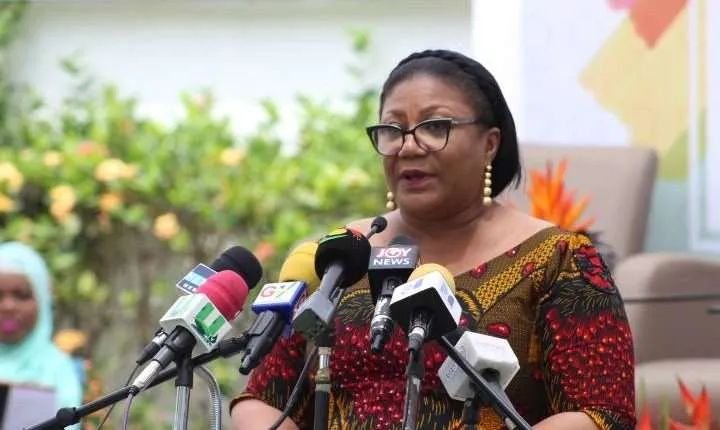
First Lady Rebecca Akufo-Addo has reminded every Ghanaian to get tested and seek treatment if diagnosed with Hepatitis.

Mrs Akufo-Addo gave the reminder when Ghana joined the rest of the world to mark Hepatitis Day yesterday, Wednesday, 28 July 2021.

The theme of “HEPATITIS CAN’T WAIT” according to Mrs Akufo-Addo is a clarion call to action adding that “every 30 seconds, someone dies from Hepatitis related conditions.”

She noted that a hepatitis-free future is achievable with a united effort.

She, therefore, called on all health units and agencies to work together to eliminate viral hepatitis as a public health threat by 2030 as set by World Health Organization

Covid: 43 Variants Identified In Ghana

The West Africa Center for Cell Biology of Infectious Pathogens (WACCBIP) says there exists some 43 different variants of the Covid-19 in Ghana.

Data collected by the Center indicate that out of the 43, not all of them have been classified to be extremely of concern to Ghana.

“The variants of concern and of interest in Ghana, we have the Alpha, Beta, Kappa, Eta and Delta. There are several of them but out of the 43, these are of major concern and that is why I am very worried and from the data that we have currently, from our sequencing we have currently, the Delta variant is picking up speed.”

Dominic S.Y. Amuzu, a Research Fellow at WACCBIP revealed on 3FM‘s Sunrise morning show Monday.

According to Mr. Amuzu, funding for research work has become a major challenge in dealing with the new variants.

“As a scientist, you don’t know what is going on so you want to be careful and bring back all the protocols and stringent measures to bring it down and more importantly as we keep saying you need to fund research.

But WACCBIP said they have extreme challenges getting samples across the country due to lack of funding.
“There used to be 10 regions, now there are 16, we should be able to sample all these 16 regions and create a database. We are trying to do this on our website but without much funding. To bring more hands and expertise, you might not be able to do this quickly. It will take us time,” he told host Alfred Ocansey.

Meanwhile, a major stakeholders’ conference scheduled to take place in Accra n Wednesday is expected to highlight these concerns in the research gap.

Speaking on the theme ‘Building Sustainable Research Capacity in Africa: Lessons Learnt from the Pandemic’, Dr. Gloria Amegatcher, who is also a Lecturer at the  West Africa Center for Cell Biology and Pathogens, said, “Research is really expensive so if we don’t invest we lose.

“Aside from the sequencing that we do, we are also looking at the exposure in the community and now with the variants that are in, there are asymptomatic people in the community….We are checking the level of antibodies they are producing and the host immune in response. All these will have to be studied in detail and we need money for that.”

Source: 3news.com

We needed to save Ghanaians from dying – ‘Frustrated’ Health Minister on overpriced Sputnik V vaccines

Kwaku Agyeman Manu

• Health Minister, Kwaku Agyeman-Manu, appeared before Parliament last weeknull

• He gave reasons to as why he procured the Russian Sputnik V through a middleman at $19

• The minister said he took that step to save the lives of dying Ghanaians

Health Minister, Kwaku Agyeman-Manu, has noted that he procured the Russian Sputnik V vaccines from a middle man, Sheik Ahmed Dalmook Al Maktoum out of frustration.

He explained that at the time of the procurement of the vaccines, the number of Ghanaians dying from coronavirus was on the high, hence, his action, to protect the lives of Ghanaians.

Appearing before the parliamentary committee to answer questions on the overpriced vaccines, the Health Minister said, “February, 78, March 56, these were the numbers [of people dying] and if you, any of us here were the Health Minister at the time, I think you might have taken certain decisions that on hindsight or going forward you may not have done those things. This was the environment that I found myself in. Out of desperation, frustration, so many things and people were dying we needed to protect our citizens.”

The contract has however been terminated after the middleman did not meet the obligations required of him.null

Background

Ghana government through Health Minister Kwaku Agyeman-Manu reportedly entered an agreement for the supply of 3.4 million doses at a unit cost of $19 after the initial cost of $25 was negotiated.

The factory price for the Sputnik V vaccine is $10 but several factors contributed to pegging it at $19.

Some of the factors that contributed to the $19 price tag included; land transportation, shipment, handling and special storage charges.

Source: www.ghanaweb.com

382 new COVID-19 cases confirmed, active load 2,853, death toll 812

Ghana’s COVID-19 death toll is now 812, the latest figures from the Ghana Health Service as of 14 July 2021, have indicated.

The active cases also stand at 2,858.

Some 382 new cases were recently confirmed.

Of the total active caseload, 12 are critical while 27 are severe.

The country has recorded a total of 98,817 cases since the virus entered Ghana in mid-March 2020.

Of that number, some 95,147 have recovered.

So far, Ghana has vaccinated 1,271,393 people with 865,422 having had their first dose and 405,971 taking their second dose.

Regional breakdown of COVID cases nationwide:

Greater Accra Region -54,115

Ashanti Region -16,889

Western Region -5,984

Eastern Region -4,559

Central Region -3,552

Volta Region -2,664

Northern Region -1,661

Bono Region -1,494

Bono East Region -1,467

Upper East Region -1,321

Western North Region -935

Ahafo Region -847 Upper West Region -500

Oti Region -467

North East Region -231

Savanna Region -132

228 new COVID-19 cases confirmed, 804 dead, active cases 2,458

Some 228 new COVID-19 cases have been confirmed by the Ghana Health Service.

It takes the number of active cases to 2,458.

Of that number, 11 are critical and 23 severe.

Since mid-March 2020, a total of 97,956 cases have been confirmed in Ghana.https://googleads.g.doubleclick.net/pagead/ads?client=ca-pub-4549410436183225&output=html&h=250&slotname=4705176708&adk=1921530005&adf=2366005940&pi=t.ma~as.4705176708&w=300&lmt=1626353301&psa=1&format=300×250&url=https%3A%2F%2Fmobile.classfmonline.com%2Fnews%2Fgeneral%2F228-new-COVID-19-cases-confirmed-804-dead-active-cases-2-458-25865&flash=0&wgl=1&dt=1626353300680&bpp=11&bdt=1873&idt=603&shv=r20210708&ptt=9&saldr=aa&abxe=1&cookie=ID%3D1c5c17d0af58e546-226ed4446dc900e2%3AT%3D1626342090%3ART%3D1626342090%3AS%3DALNI_Mbc2-mnP2sSxLEMhlfEyqN71ERhBw&prev_fmts=0x0%2C300x250&nras=1&correlator=821632128731&frm=20&pv=1&ga_vid=2093536286.1626342090&ga_sid=1626353301&ga_hid=5387941&ga_fc=0&u_tz=0&u_his=1&u_java=0&u_h=892&u_w=412&u_ah=892&u_aw=412&u_cd=24&u_nplug=0&u_nmime=0&adx=56&ady=1066&biw=412&bih=797&scr_x=0&scr_y=106&eid=31060975%2C31061747%2C31060474%2C31061383%2C44740386&oid=3&pvsid=211724475230946&pem=606&ref=http%3A%2F%2Fm.facebook.com%2F&eae=0&fc=1920&brdim=0%2C0%2C0%2C0%2C412%2C0%2C412%2C797%2C412%2C797&vis=1&rsz=%7C%7CEebr%7C&abl=CS&pfx=0&fu=0&bc=31&ifi=3&uci=a!3&btvi=1&fsb=1&xpc=XLZlFlucyY&p=https%3A//mobile.classfmonline.com&dtd=626

Of that number, 94,694 have recovered.

So far, 804 people have died.

Regional breakdown:

Greater Accra Region -53,734

Ashanti Region -16,624

Western Region -5,967

Eastern Region -4,500

Central Region -3,552

Volta Region -2,643

Northern Region -1,661

Bono Region -1,455

Bono East Region -1,454

Upper East Region -1,320

Western North Region -919

Ahafo Region -833

Upper West Region -500 Oti Region -463

North East Region -231

Savanna Region -129

COVID-19: ‘ICUs not full; critical cases up but we’re not overwhelmed’ – GHS

Ghana’s ICUs are not full, the Ghana Health Service has said.

Director-General Patrick Kuma-Aboagye told journalists on Wednesday, 14 July 2021 at a media briefing that: “Our ICUs are not full”.

“For example, Ridge Hospital has 16 ICUs beds but as we speak, they only have three occupants”.

“Ga East has about 19 cases currently on admission with six on ICU”.https://googleads.g.doubleclick.net/pagead/ads?client=ca-pub-4549410436183225&output=html&h=250&slotname=4705176708&adk=1921530005&adf=2366005940&pi=t.ma~as.4705176708&w=300&lmt=1626342089&psa=0&format=300×250&url=https%3A%2F%2Fmobile.classfmonline.com%2Fnews%2Fhealth%2FCOVID-19-ICUs-not-full-critical-cases-up-but-we-re-not-overwhelmed-GHS-25864&flash=0&wgl=1&dt=1626342088672&bpp=9&bdt=2535&idt=1175&shv=r20210708&ptt=9&saldr=aa&abxe=1&prev_fmts=0x0%2C300x250&nras=1&correlator=2701864075182&frm=20&pv=1&ga_vid=2093536286.1626342090&ga_sid=1626342090&ga_hid=1797080274&ga_fc=0&u_tz=0&u_his=1&u_java=0&u_h=892&u_w=412&u_ah=892&u_aw=412&u_cd=24&u_nplug=0&u_nmime=0&adx=56&ady=1154&biw=412&bih=797&scr_x=0&scr_y=2106&eid=42530671%2C31060972%2C31060975%2C31061486%2C31061747%2C31060474&oid=3&pvsid=353170936326607&pem=606&ref=http%3A%2F%2Fm.facebook.com%2F&eae=0&fc=1920&brdim=0%2C0%2C0%2C0%2C412%2C0%2C412%2C797%2C412%2C797&vis=1&rsz=%7C%7CEe%7C&abl=CS&pfx=0&fu=0&bc=31&ifi=3&uci=a!3&fsb=1&xpc=Hih3wmEPgE&p=https%3A//mobile.classfmonline.com&dtd=1198

“There is a plan to upgrade further with support from the COVID-19 Fund, the ICU capacity at the Ridge Hospital”, he announced. “As I said, the critical cases have increased but we are not overwhelmed yet.”

“To prepare for more vaccines, we have had to upgrade our cold chain facilities, especially the ultra-negative cold chain which can store Pfizer, Moderna, and others,” he said.

“So far, with our collaboration with Zipline, we have the capacity to store about 1.7 million doses. Yesterday [Tuesday] we received 16 ultra-negative cold chain vaccines that will be distributed to all the 16 regions in the country to ensure we are able to vaccinate as many Ghanaians as possible.”

Also, he said Ghana is to take delivery of some 1.2 million doses of the Pfizer COVID-19 vaccine in mid-August this year.

Dr Kuma-Aboagye said: “We are expecting about 1.2 million Pfizer vaccines from the US through COVAX, and we are hoping that latest by the middle of August, it should be available”.

Dr Kuma-Aboagye also revealed that a total of 2,323 students from 363 schools have tested positive for COVID-19 since the beginning of 2021.

“The North East Region is the only region with no cases recorded in schools,” he said.

Achimota SHS in Accra is one of the hardest-hit in the Greater Accra Region.

It has been on a two-week partial lockdown following the detection of 135 cases of the Delta variant among some students and staff.

According to Dr Kuma-Aboagye, a total of 1,173 students and staff had their samples taken and 195 students tested positive out of the 1,156 results available.

Also, 120 have recovered.

The active cases in the school currently stands at 75

Nsiah Asare: Danger looms as Ghana’s COVID-19 cases rise

Dr Anthony Nsiah Asare

 Dr Anthony Nsiah Asare

The presidential advisor on health says the country does not have adequate facilities and equipment to treat patients should Ghana face a new wave of COVID-19
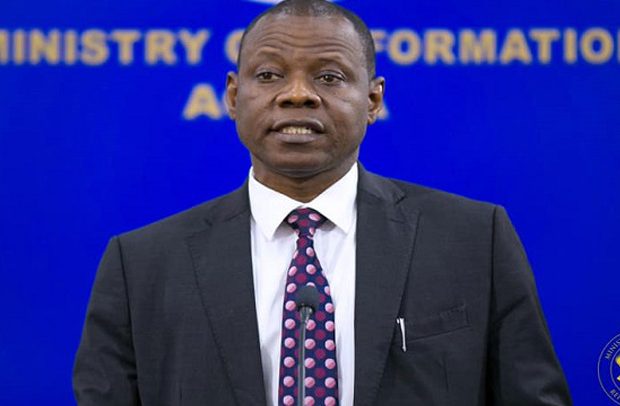
Dr Anthony Nsiah Asare, the Presidential Advisor on Health has admonished all Ghanaians to adhere strictly to COVID-19 safety protocols as he warns a third wave of the deadly virus could overwhelm the country.

His assertions follow a confirmation that the country’s hospitals are currently burdened by new severe infections of COVID-19, especially the UK strain and the Delta variant.

Speaking in an exclusive interview with host of The Big Bulletin, Beatrice Adu, he said the country currently does not have adequate facilities, equipment and health practitioners to treat patients should Ghana experience a new wave of COVID-19, especially in the hotspots like the Greater Accra and the Ashanti regions.

“We know that the active cases are going up, we have also seen a slight increase in the number of severe cases, and critical cases.

“So, once we see active cases going up it means the critical care beds, which are the most important beds because they are for people who need emergency care, oxygen and the rest must be available and unfortunately, we don’t have a lot of critical beds in the country and for that matter, in the hotspot areas like Greater Accra and Greater Kumasi metropolis. So that is where our concern is and we are entreating everybody to obey strictly the COVID-19 protocols,” Dr Asare said.

Adhere to protocols

He also refuted claims that the increase in the country’s case count is as a result of the new Delta variant explaining that the number of active cases would continue to increase if Ghanaians do not adhere to COVID-19 safety precautions.

“The new strain is very transmissible, and it spreads very quickly but the most important thing is, whether it is the new strain, Wuhan strain or any other strain, the most important thing is, put on your mask, wash your hands, and use sanitisers, and don’t go to crowded places,” he warned.

Ghana’s active cases stand at 2, 314 as the death toll hits 802

Ghana’s active COVID-19 cases jump to 2,247; death toll 801

The number of Ghana’s active COVID-19 cases has shot up to 2,247, the latest figures from the Ghana Health Service as of 8 July 2021 indicate.

Of that number, eleven are in critical condition while 23 are severe.

The death toll has also climbed to 801.

Some 148 new cases were also confirmed recently.

Since mid-March 2020, Ghana has recorded a total caseload of 97,585.

Out of that number, 94,537 have recovered

Ghana’s active COVID-19 cases climb to 1,758

Ghana has recorded some 129 new cases of COVID-19, the latest figures from the Ghana Health Service (GHS) has indicated.

The current active caseload is 1,758.

Since mid-March 2020, Ghana has recorded a total of 96,708 cases.

Of that number, 94,153 have recovered.

The national death toll is 797.

Regional breakdown:

Greater Accra Region -53,051

Ashanti Region -16,269

Western Region -5,957

Eastern Region -4,464

Central Region -3,552

Volta Region -2,617

Northern Region -1,661

Bono East Region -1,447

Bono Region -1,434

Upper East Region -1,320

Western North Region -919

Ahafo Region -794

Upper West Region -500

Oti Region -461 North East Region -231

Savanna Region -123

3.1 million Ghanaians suffering mental disorders, 16,000 cases severe

1.21014809

An estimated 3.1 million Ghanaians, representing 10 percent of the estimated 31 million population of Ghana, have one form of mental disorder or the other, with 16,000 having severe cases.null

Sourcing the data from the WHO and the Ghana Mental Health Authority, Mr Kwaku Agyeman-Manu, the Health Minister, told Parliament that:

“It is clearly established that 41 percent of Ghanaians have psychological distress – mild, moderate, severe – and this costs the nation 7 percent GDP loss”

He was responding to a question by Mr Christian Corletey Otuteye, the MP for Sege, who wanted to know what plans the Ministry had to address the plight of persons with mental health problems in Ghana.

The Minister categorised persons with mental health problems into four: those on the street, those at treatment facilities, which include psychiatric and general health facilities, those in the traditional and faith healing centres, and those in their houses and organisations who do not recognise their mental health illness or who recognise but are not doing anything about it.

”The World Health Organisation (WHO) estimates that 10 percent of the population of Ghana has one form of mental disorder or the other. Thus, with an estimated 31 million population in Ghana, we have an estimated 3.1 million with mental disorders,” he said.null

“The Mental Health Authority did a rapid assessment, a mini census of persons with severe mental illness on the streets a few years ago and they got 16,000 people in our cities, towns and villages all over the country.”

Mr Agyeman-Manu assured the House that the Ministry and its allied institutions including the Mental Health Authority, the Ghana Health Service and others, knew the size of the problem and had the human resources to address it.

“What we are doing now is to spread mental health services nationwide, integrate into the general health care such that wherever we treat malaria, mental health can be treated. This will help to access care,” he said.

Mr Agyeman-Manu said under the Agenda 111 programme of government, two new psychiatric hospitals were to be built in the northern and middle belts, adding that the sites had been identified, drawings made, and contractors being chosen.

He said until recently, psychiatric medications were not readily available, but they were now available through budgetary allocations and donor support adding that more psychiatrists had also been trained, from 10 to 45 at the moment.null

He solicited the support of the Speaker to find more money to address mental health issues, and announced that the Ministry was working on how to establish a Mental Health Levy.

The Minister advocated an increase in budgetary allocation to enable mental health patients on the streets to be taken in small numbers at a time for treatment and sent back home to their communities.

In relation to a question on anti-snake serum asked by Mr Daniel Nsala Wakpai, MP for Kpandai, Mr Agyeman-Manu announced that the Ministry had included Anti-Snake Serum in the Framework Contract for Essential Medicines.

Under the Framework, qualified firms are selected to supply Anti-Snake Serum, which are allocated and distributed to regional medical stores (RMS) and teaching hospitals across the country.

“The Ministry allocates the quantities to the RMS and the teaching hospitals based on their consumption and replenishes as the stocks reach their reorder level,” he said

.Source: GNA

Delta’ variant: 89 recovered; active cases 46 at Achimota School – GHS

At least two-thirds of the Covid-19 cases(89) recorded at the Achimota School in Accra have recovered, according to GHS.

In all 135 cases were recorded initially, but GHS reports 46 current active cases at the school.

All the 135 cases at the time of diagnosis were either asymptomatic or mild to moderate illness, the  Director-General of the GHS, Dr Patrick Kuma Aboagye said at a Press conference.

According to him, a “significant” number of the cases at Achimota School were the deadly Delta variant.

The Ministry of Information, on Friday, 2 June 2021, announced that the Delta variant had been found in a community within the country.

“At 10:00hours on Friday, 2 July 2021, the Covid-19 task force was advised by the Ghana Health Service that the Delta variant of the SARS-Cov-2 virus has been recorded within a community (ie non-arriving passengers) in the latest round of genomic sequencing”, the Ministry posted on its Facebook page.

One percent of the Population fully Vaccinated

Three hundred ninety-six thousand seven hundred fifty-nine (396,759) Ghanaian residents have received both doses of the AstraZeneca Coronavirus vaccine, official figures from the Ghana Health Service (GHS) show.

The figures announced by the Director-General of the GHS, Dr Patrick Kuma-Aboagye represents 1.3% of Ghana’s population of 30 million

First Lady Charges Ghana Academy of Nutrition and Dietetics

Mrs Akufo-Addo speaking during the congress

First Lady, Mrs Rebecca Akufo-Addo, has made a passionate appeal to the Ghana Academy of Nutrition and Dietetics and other stakeholders to take the necessary actions to ensure Ghana meets her nutritional goals and achieves optimum health for all.

Speaking at the opening session of a two-day congress on the theme “Synchronizing the Frontiers of Nutrition and Dietetics for sustainable National Impact” Mrs. Akufo-Addo said “There is an urgent need, to ensure that the poor and vulnerable have access to the needed knowledge, resources, and services to achieve optimum nutrition. This calls for a great deal of work, which needs to be carried out, within a very limited timeframe”.

Referencing the 2020 Global Nutrition Report, the First Lady indicated that Ghana is on track to achieving the global targets for maternal, infant and young child nutrition and has made some progress towards reducing anaemia among women of reproductive age, low birth weight of newborn infants and stunting of children under 5 years.

The First Lady however said there was still a lot of work to be done despite these gains.

“Ghana still has not made much progress towards exclusive breastfeeding, reducing stunting and wasting in children and curbing diet-related non-communicable diseases such as adult obesity and diabetes,” she said.

Mrs Akufo-Addo urged all relevant stakeholders including the Ministries of Health, Finance and Economic Planning and Agriculture, to make adequate investments to ensure optimal nutrition in the critical 1000 day window, between the start of a woman’s pregnancy and her child’s second birthday and to ensure the poor and vulnerable are supported to achieve optimum health.

Minister of Health, Kwaku Agyeman-Manu, Professor Anna Lartey, Director of Nutrition and Food Systems Division, FAO Geneva, Italy, Professor Matilda Steiner–Asiedu and the President of the Ghana Academy of Nutrition and Dietetics, Dr Kingsley K. A. Preko joined the virtual meeting.

Most Cases Of Delta Covid-19 To Ghana Are From Liberia, Sierra Leone – GHS

The Ghana Health Service (GHS) says most international travelers arriving in Ghana with the Delta variant of coronavirus are from Liberia and Sierra Leone.

Director General of GHS, Dr. Patrick Kuma-Aboagye, made this known to the press in Accra on Sunday, July 4th, 2021.

He stated that therefore that “additional measures being implemented against arrivals from hot spot countries (Liberia and Sierra Leone.”

He stated that the delta variant has a higher transmission rate.

According to him, genomic sequencing for coronavirus in Ghana was being done by NMIMR, WACBIP and UHAS.

He noted that a total of 1,212 covid19 samples have been sequenced.

He reiterated that community detection of the delta strain was confirmed on July , 2021

Coronavirus: Ghana’s rising active cases hit 1,674

C0481846 Wuhan Novel Coronavirus Illustration Spl

The number of active COVID-19 cases in Ghana has risen to 1,674, the latest figures of the Ghana Health Service indicate.

Of that number, 9 are in critical condition and 19 cases have been categorised as severe.

Since mid-March 2020, a total of 796 people have died of the virus.

Ghana has recorded a total of 95,914 since the virus entered the country last year, with 93,444 recoveries.

Regional breakdown:

Greater Accra Region – 52,710

Ashanti Region – 15,984

Western Region – 5,936

Eastern Region – 4,407null

Central Region – 3,551

Volta Region – 2,609

Northern Region – 1,660

Bono East Region – 1,446

Bono Region – 1,425

Upper East Region – 1,320

Western North Region – 916

Ahafo Region – 775null

Upper West Region – 500

Oti Region – 459

North East Region – 231

Savanna Region – 123

Meanwhile, the Delta variant of the pandemic has been detected in a senior high school in the national capital, Accra.

This was disclosed by the Director of Public Health at the Ghana Health Service, Dr Franklin Asiedu-Bekoe.

He said: “Yesterday [Friday], we had information that the school had actually detected a Delta variant and this, somehow, confirms what we were anticipating”.

“The parents of the students who have been infected have been informed”, he said.null

The Ministry of Information, on Friday, announced that the Delta variant has been found in a community within the country.

“At 10:00hours on Friday, 2 July 2021, the Covid-19 task force was advised by the Ghana Health Service that the Delta variant of the SARS-Cov-2 virus has been recorded within a community (ie non-arriving passengers) in the latest round of genomic sequencing”, the Ministry posted on its Facebook page.

It said the “relevant agencies are taking the necessary steps to ensure that spread is contained”.

The positive persons, it noted, “are in good health”.

“The task force will provide further details at 13:00hours on Sunday, 4 July 2021”, the ministry promised.

It urged the general public to “adhere strictly to the COVID preventive etiquette while going about permitted activities”.

About two weeks ago, six Delta variants of the SARS-CoV-2 (COVID-19 virus) were detected from all the samples taken between April and June 2021 at the ports of entry, the Ghana Health Service (GHS) disclosed.

A statement signed by the Director-General of the GHS, Dr Patrick Kuma-Aboagye, on Tuesday, 22 June 2021, however, said at the time that “no Delta variant has been detected from samples taken from cases in the community”.null

According to the statement, the AstraZeneca and Sputnik V vaccines are effective against the deadly Indian strain of the Coronavirus detected, known as the Delta variant in Ghana recently.

In reaction to an online publication discrediting the potency of vaccines against the Delta variant of the virus, detected at the Kotoka International Airport, the statement noted that “reports that Sputnik-V and AstraZeneca vaccines are not effective against the Delta strain of SARS-Cov-2 (the virus that causes COVID-19) are untrue”.

The statement revealed that according to data from the Public Health England (PHE), “two doses of the Oxford-AstraZeneca vaccine are highly effective against hospitalisation due to the Delta variant and showed no deaths among those vaccinated.”

“A study conducted by Gamaleya Center suggests that Sputnik-V is more efficient against the Delta variant of coronavirus, first detected in India, compared to other COVID-19 vaccines,” the statement said.

“The data also suggest that the AstraZeneca vaccine is effective against symptomatic disease caused by the Delta variant,” GHS added.

The statement further reiterated the measures put in place to curb the spread of the coronavirus at the airport saying: “All passengers who test positive are put under mandatory isolation.”

“All positive samples are sent for further testing (genomic sequencing) to identify the variants”.

It added that variants sequenced from samples of positive cases at the Airport do not necessarily end up in the community

.Source: classfmonline.com

Coronavirus: Ghana records six Delta variants so far

Coronavirus1 1

Ghana has detected six Delta variants of COVID-19 so far, the Ghana Health Service (GHS) has confirmed.null

The variants were confirmed from samples taken from passengers at the Kotoka International Airport between April and June.

A press release issued by the Director General of the Service, Dr Patrick Kuma-Aboagye, on Tuesday, June 22 to respond to some media reports said: “No Delta variant has been detected from samples taken from cases in the community.”

This comes in the wake of reports that the deadly Indian strain was within the populace while the approved vaccines in Ghana cannot immune one against it.

Dr Kuma-Aboagye, in the press release, admits that there has been a surge in the virus recently but “reports that Sputnik-V and AstraZeneca vaccines are not effective against the Delta strain of SARS-Cov-2 (the virus that causes COVID-19) are untrue”.

He cites the Public Health England, which says that two doses of the Oxford-AstraZeneca vaccine are highly effective against hospitalisation due to the Delta variant.

He, therefore, urged Ghanaians to take advantage of vaccination when their turn is due and entreated all and sundry to adhere to the COVID-19 safety protocols.Source: 3news.com

Covid-19 Delta Variant Not Detected In Communities -GHS

Dr. Patrick Kuma-Aboagye

The Ministry of Health (MoH) and the Ghana Health Service (GHS) have indicated that the Delta variant of Covid-19 has not been detected in communities.

According to a statement signed by the Director-General, GHS, Dr Patrick Kuma-Aboagye, no Delta variant has been detected from samples taken from cases in the community.

“As of now, the country has detected six Delta variants of the SARS-CoV-2 (COVID-19 virus) from all samples taken between April and June 2021 at the ports of entry,” the statement indicated.

The health service noted that all passengers who test positive at Kotoka International Airport (KIA) are put under mandatory isolation.

“All positive samples are sent for further testing (genomic sequencing) to identify the variants.

Variants sequenced from samples of positive cases at the Airport do not necessarily end up in the community,” it explained.

The MOH and GHS further stated that the country in April 2021, experienced a surge in cases at the airport during which period 308 positives were identified.

However, it said Ghana has not experienced the third wave partly due to the robust surveillance system in place at the ports of entry and strict isolation of all cases detected.

The health authorities reiterated their assurance that the Sputnik-V and AstraZeneca vaccines are effective against the Delta strain of SARS-Cov-2 (the virus that causes COVID-19).

“According to Public Health England (PHE), two doses of the Oxford-AstraZeneca vaccine are highly effective against hospitalisation due to the Delta variant and showed no deaths among those vaccinated. The data also suggest that the AstraZeneca vaccine is effective against symptomatic disease caused by the Delta variant,” the statement said.

A study conducted by Gamaleya Center suggests that Sputnik-V is more efficient against the Delta variant of coronavirus, first detected in India, compared to other COVID-19 vaccines.

Amid global supply shortages, the MOH and GHS reiterated their efforts to ensure that adequate vaccines are procured to protect the population.

“The MOH, GHS and the Food and Drugs Authority (FDA) are working collaboratively to ensure that vaccines that come into the country are safe and effective.

The Service would like to urge Ghanaians to take advantage of vaccination when their turn is due while entreating the general public to adhere to the COVID-19 prevention protocols i.e., wearing of face masks, practising hand hygiene and physical distancing as part of the strategies,” it said

Government to provide new sickle cell medicine under NHIS

Hydroxyurea, a modifying therapy for sickle cell is expected to be provided under the National Health Insurance Scheme (NHIS).

The move, according to Vice President Dr Mahamudu Bawumia, is to help improve the physical health of people living with sickle cell in Ghana.

“This is a promise that has been fulfilled by President Nana Addo Dankwa Akufo-Addo,” he said in a post on Facebook.

“As the world marked Sickle Cell Awareness Day on 19th June, I am pleased to announce that at a meeting I chaired on June 8, 2021, with stakeholders including Professor Ohene Frimpong, President of the Sickle Cell Foundation, the Minister of Health, the National Health Insurance Authority and Novartis, it was agreed that hydroxyurea, a modifying therapy for sickle cell will now be provided under the NHIS to improve the physical health of people living with it.